Apartment 33 m² - Shalva Inasaridze, Batumi, Georgia
41 000 $
ID 5505 · Apartment · Batumi
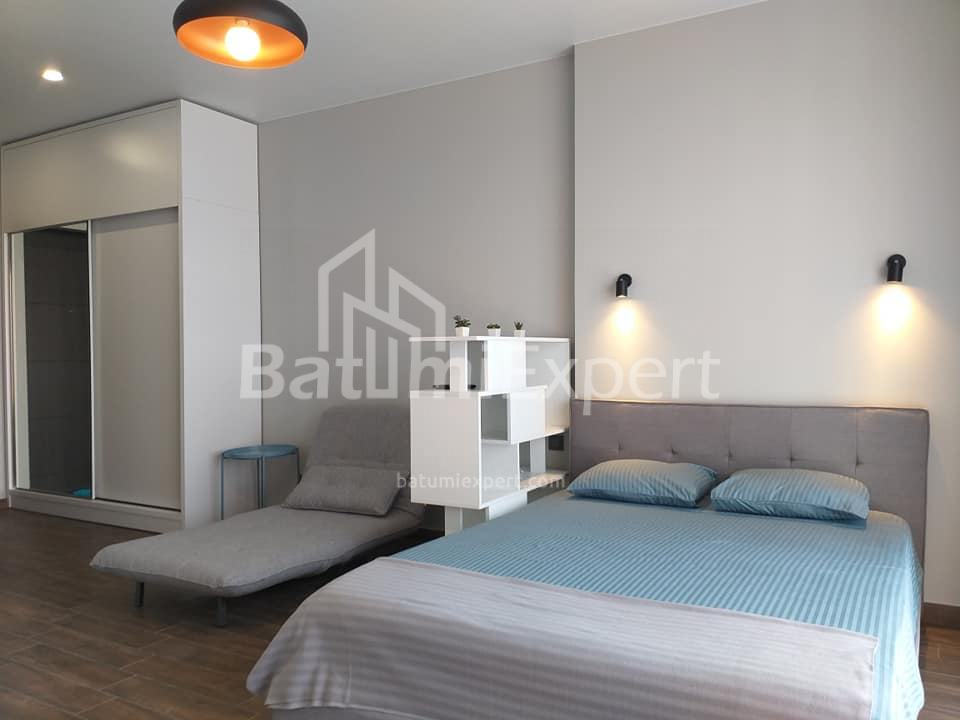
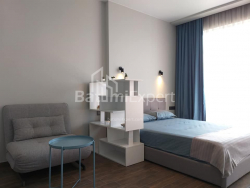
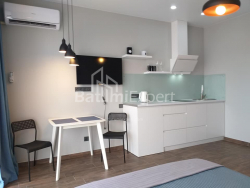
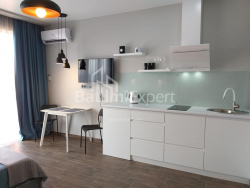
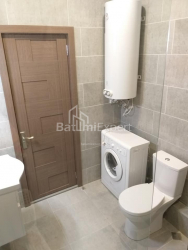
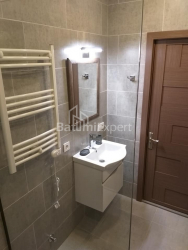
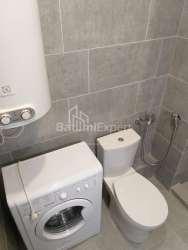
About the apartment
| Rooms | 1 | Area | 33 m² |
| Floor | 12 / 19 | Living | 25 m² |
| Reception | Yes | ||
| Hot water | Water heater | ||
| WiFi | Yes | ||
| TV | Yes | ||
| Air conditioner | Yes | ||
| Washing machine | Yes | ||
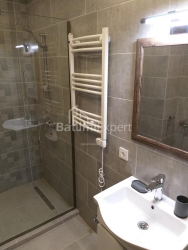
| Bathroom equipment | Shower cabin | ||
| Layout | Studio | ||
| Property condition | Designer project | ||
| Furniture | With furniture | ||
| Bathroom | Adjoining | ||
| Number of bathrooms | 1 | ||
| Number of balconies | 1 | ||
| Natural gas | Connection possible | ||
| Heating type | Split system | ||
| Window type | Aluminum | ||
| Wall type | Brick | ||
| Elevator | 2 | ||
Location
- City: Batumi
- Located on the intersection of: Shalva Inasaridze - Iusuf Kobaladze
- Distance to sea: 0 - 200 m
- To airport: 3 km
- To old town: 4 km
- Window view: Mountain view
Description
The apartment is ideal as an investment in real estate in Batumi. The apartment is located in the new project Next Orange. Downstairs there will be a reception, video surveillance. The apartment is designed in a designer style. The apartment is within walking distance to the sea and the new boulevard of Batumi. House with developed infrastructure: 24-hour supermarkets, pharmacies, restaurants. Convenient transport interchange.
Useful information about Batumi and Georgia
Museum of Archeology of Batumi
Georgia is rich in a large number of archeological monuments. Many tourists tend to come to this country for this reason. & Nbsp;
One of the most remarkable museums of archeology is located in Batumi, where you can not only learn the history of this region, but also admire the gold jewelry of ancient masters.
1. About the museum.
Despite the fact that the museum was officially opened in 1994, it appeared about a hundred years ago. The difference of the Archaeological Museum is that its walls contain cultural monuments from different eras and which are unique in their field of culture. The museum itself has a certain atmosphere, which is felt by everyone within its walls and helps to imbue with the need to get acquainted and study the history of Adjara.
2. What you can admire in the museum.
The museum has more than twenty thousand exhibits that are constantly being digitized. The exposition begins with representations of the Stone and then the Iron Age. The objects of the Stone Age, which are more than ten thousand years old, delight and inspire to continue the search for the tribal culture of Colchis. In the unusual niches of the ground floor there are many ancient artifacts. They were arranged in a semicircle, in a specific order, in the creation chronology. & Nbsp;
There are not only antique exhibits, but also objects of the early and late Middle Ages, Roman and Greek objects, coins from the medieval fortresses of Adjara. All exhibits were found in the vicinity of Batumi. Near Tsikhisdziri, household items of antiquity, military weapons and various tools were found. The ruins at the excavation site did not prevent the discovery of artifacts in good condition and the treasure was preserved without being plundered. In the 6th century, the emperor of Byzantium, Justinian, built a well-fortified city. The fortress was of great importance as a fortification and the Persians besieged for a long time, and then captured the city. The Byzantines did not want to endure this, and the Byzantines, having destroyed the city, captured the fortress.
Interesting finds in the form of bronze and silver coins, clay and glass products were found in the vicinity of Batumi. The finds are dated to the 3rd century AD. The age of glass is such that it belongs to the most ancient artifacts of the region, where its own glass was not produced at that time. So, it was brought in by the merchants of that era from the Roman Empire.
Antique settlement, Greek, Hellenistic burial grounds allowed to discover and identify many important historical finds. But an indelible impression is left by objects from the excavations of the Gonio-Apsaros fortress: objects of the Roman and ancient periods, sculptures of the Romans, the God of the Hellenes.
It was assumed that there were times when Adjara and the Arab world were connected by trade, cultural and diplomatic relations. This is proved by the treasure stored in the treasures of the archaeological museum. Objects belonging to the Ottoman Empire were found there, which is additional evidence of the existence of trade routes along the territory of Adjara. Coins, dishes made of bronze and clay, prints depicting the heroes of mythological subjects and the Olympic Games of antiquity depicted on them, the goddess Aphrodite, and much more came into the treasure from the Gonio-Apsaros fortress.
In the exhibition dedicated to the Stone and Bronze Age, visitors can see unusual objects: stone scrapers, Colchis axes, metallurgical products. Near Batumi there were iron mines.
In 2014, there were so many gold products that it became possible to unite the exhibits in the & laquo; Gold Fund & raquo ;.
Within the walls of the museum, hundreds of exhibits from all Adjarian territory are stored, studied and restored.
One of the most remarkable museums of archeology is located in Batumi, where you can not only learn the history of this region, but also admire the gold jewelry of ancient masters.
1. About the museum.
Despite the fact that the museum was officially opened in 1994, it appeared about a hundred years ago. The difference of the Archaeological Museum is that its walls contain cultural monuments from different eras and which are unique in their field of culture. The museum itself has a certain atmosphere, which is felt by everyone within its walls and helps to imbue with the need to get acquainted and study the history of Adjara.
2. What you can admire in the museum.
The museum has more than twenty thousand exhibits that are constantly being digitized. The exposition begins with representations of the Stone and then the Iron Age. The objects of the Stone Age, which are more than ten thousand years old, delight and inspire to continue the search for the tribal culture of Colchis. In the unusual niches of the ground floor there are many ancient artifacts. They were arranged in a semicircle, in a specific order, in the creation chronology. & Nbsp;
There are not only antique exhibits, but also objects of the early and late Middle Ages, Roman and Greek objects, coins from the medieval fortresses of Adjara. All exhibits were found in the vicinity of Batumi. Near Tsikhisdziri, household items of antiquity, military weapons and various tools were found. The ruins at the excavation site did not prevent the discovery of artifacts in good condition and the treasure was preserved without being plundered. In the 6th century, the emperor of Byzantium, Justinian, built a well-fortified city. The fortress was of great importance as a fortification and the Persians besieged for a long time, and then captured the city. The Byzantines did not want to endure this, and the Byzantines, having destroyed the city, captured the fortress.
Interesting finds in the form of bronze and silver coins, clay and glass products were found in the vicinity of Batumi. The finds are dated to the 3rd century AD. The age of glass is such that it belongs to the most ancient artifacts of the region, where its own glass was not produced at that time. So, it was brought in by the merchants of that era from the Roman Empire.
Antique settlement, Greek, Hellenistic burial grounds allowed to discover and identify many important historical finds. But an indelible impression is left by objects from the excavations of the Gonio-Apsaros fortress: objects of the Roman and ancient periods, sculptures of the Romans, the God of the Hellenes.
It was assumed that there were times when Adjara and the Arab world were connected by trade, cultural and diplomatic relations. This is proved by the treasure stored in the treasures of the archaeological museum. Objects belonging to the Ottoman Empire were found there, which is additional evidence of the existence of trade routes along the territory of Adjara. Coins, dishes made of bronze and clay, prints depicting the heroes of mythological subjects and the Olympic Games of antiquity depicted on them, the goddess Aphrodite, and much more came into the treasure from the Gonio-Apsaros fortress.
In the exhibition dedicated to the Stone and Bronze Age, visitors can see unusual objects: stone scrapers, Colchis axes, metallurgical products. Near Batumi there were iron mines.
In 2014, there were so many gold products that it became possible to unite the exhibits in the & laquo; Gold Fund & raquo ;.
Within the walls of the museum, hundreds of exhibits from all Adjarian territory are stored, studied and restored.